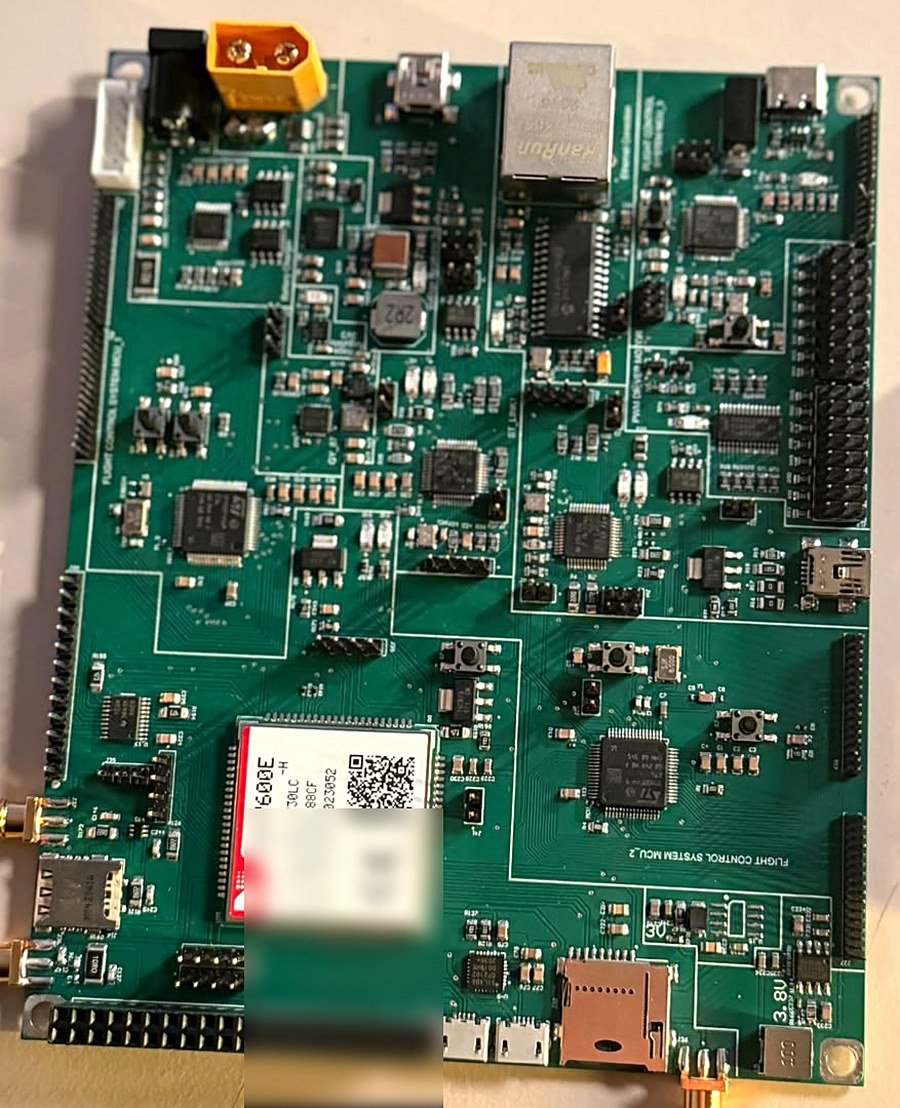
AeroNext Technologies develops the systems that make unmanned aircraft fly further and think for themselves — engines, electronic control units, embedded avionics, and the software that ties them together.
We work at the hardest layer of the unmanned stack — the one that decides whether an aircraft stays in the air. The powerplant, the control electronics, and the software that commands them are developed together, as one system.
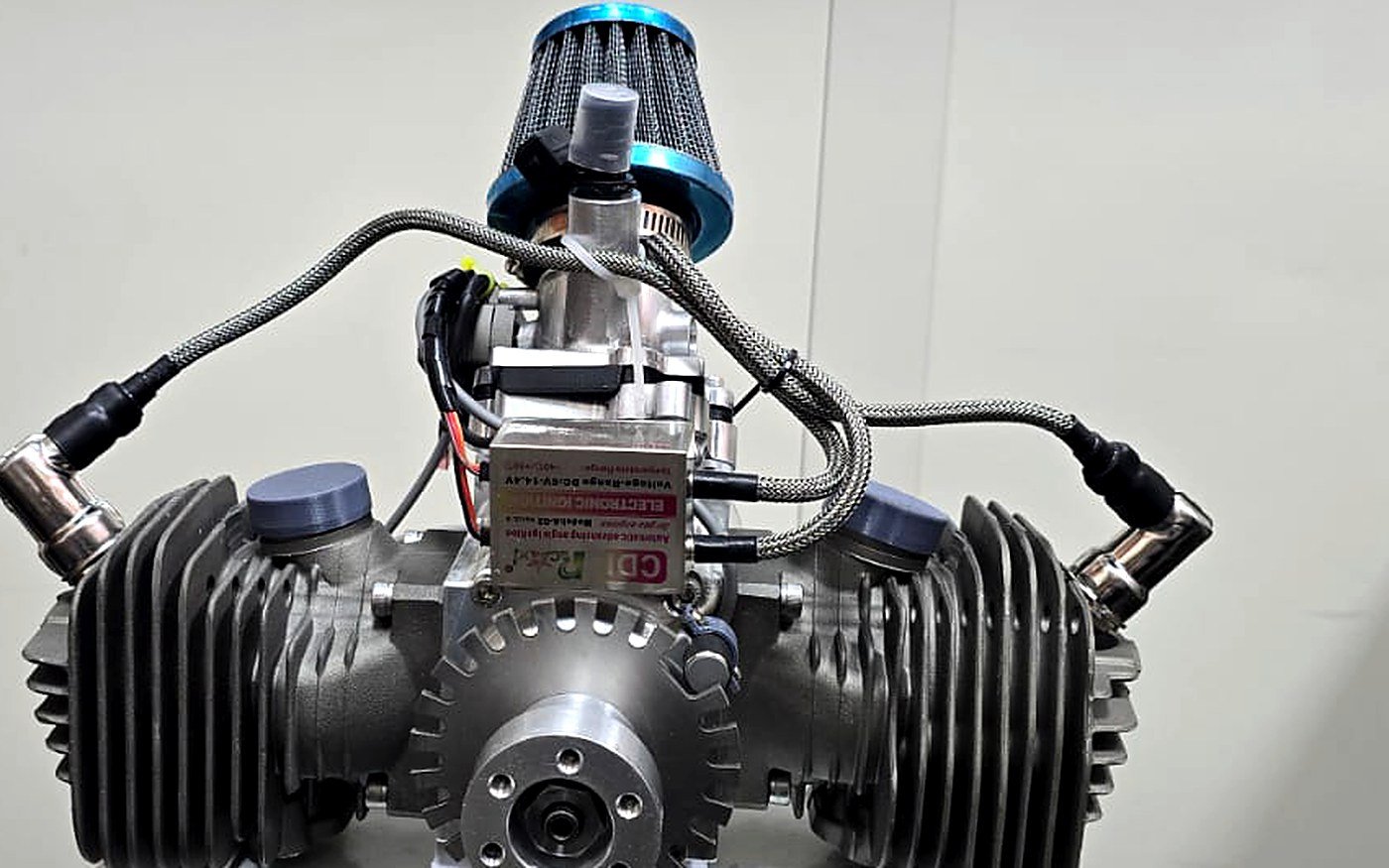
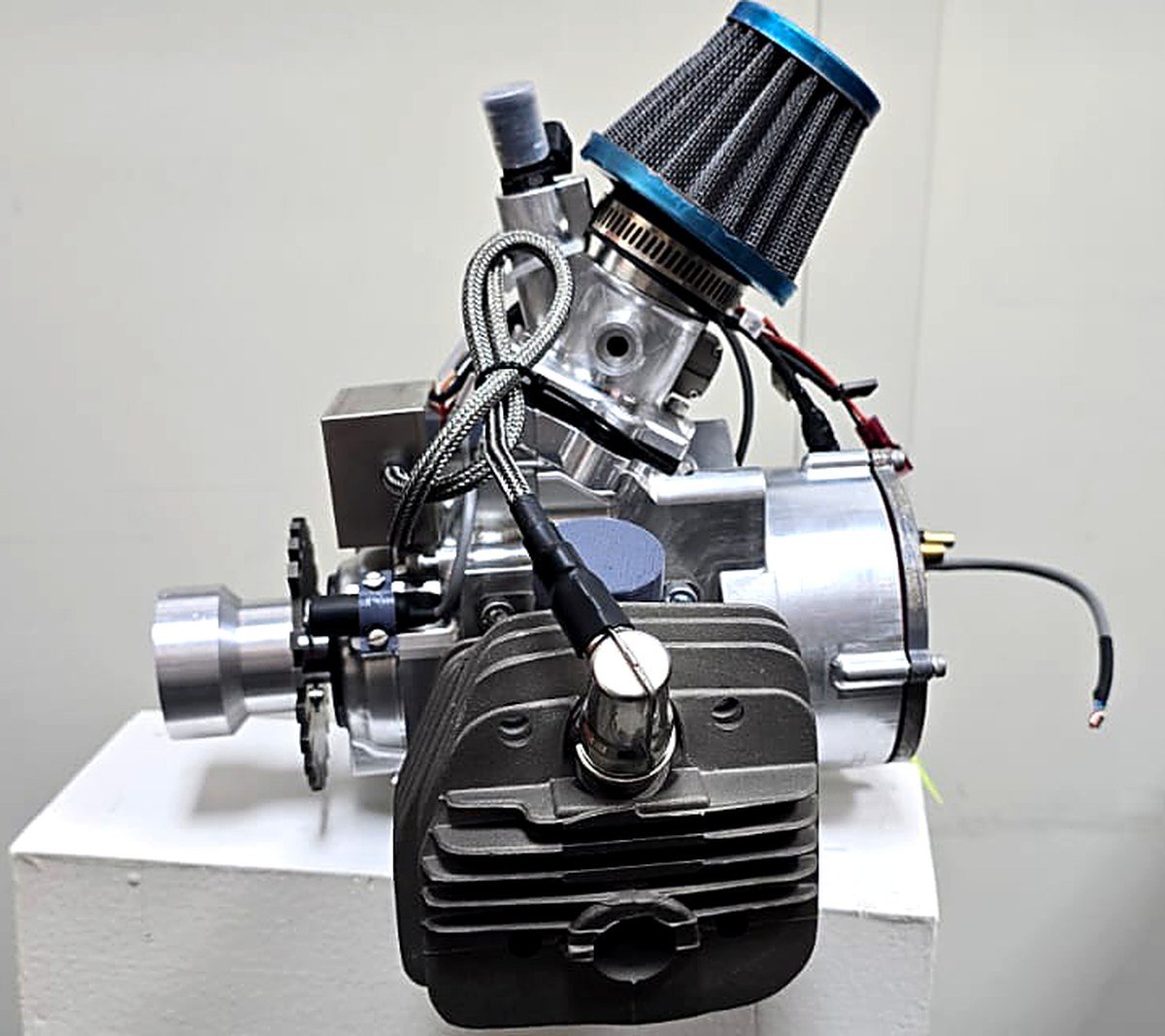
Internal combustion remains the only practical answer where endurance and payload matter more than simplicity — electric platforms cannot yet reach the flight times these missions demand. We develop opposed-twin and single-cylinder powerplants with integrated starting and electrical generation, so the engine delivers thrust and ship power from one installation.

A single unit that merges engine control, electrical generation, and power management into one propulsion architecture. Consolidating those functions removes redundant wiring looms and separate controllers — cutting weight and failure points on an airframe where both matter more than anywhere else.

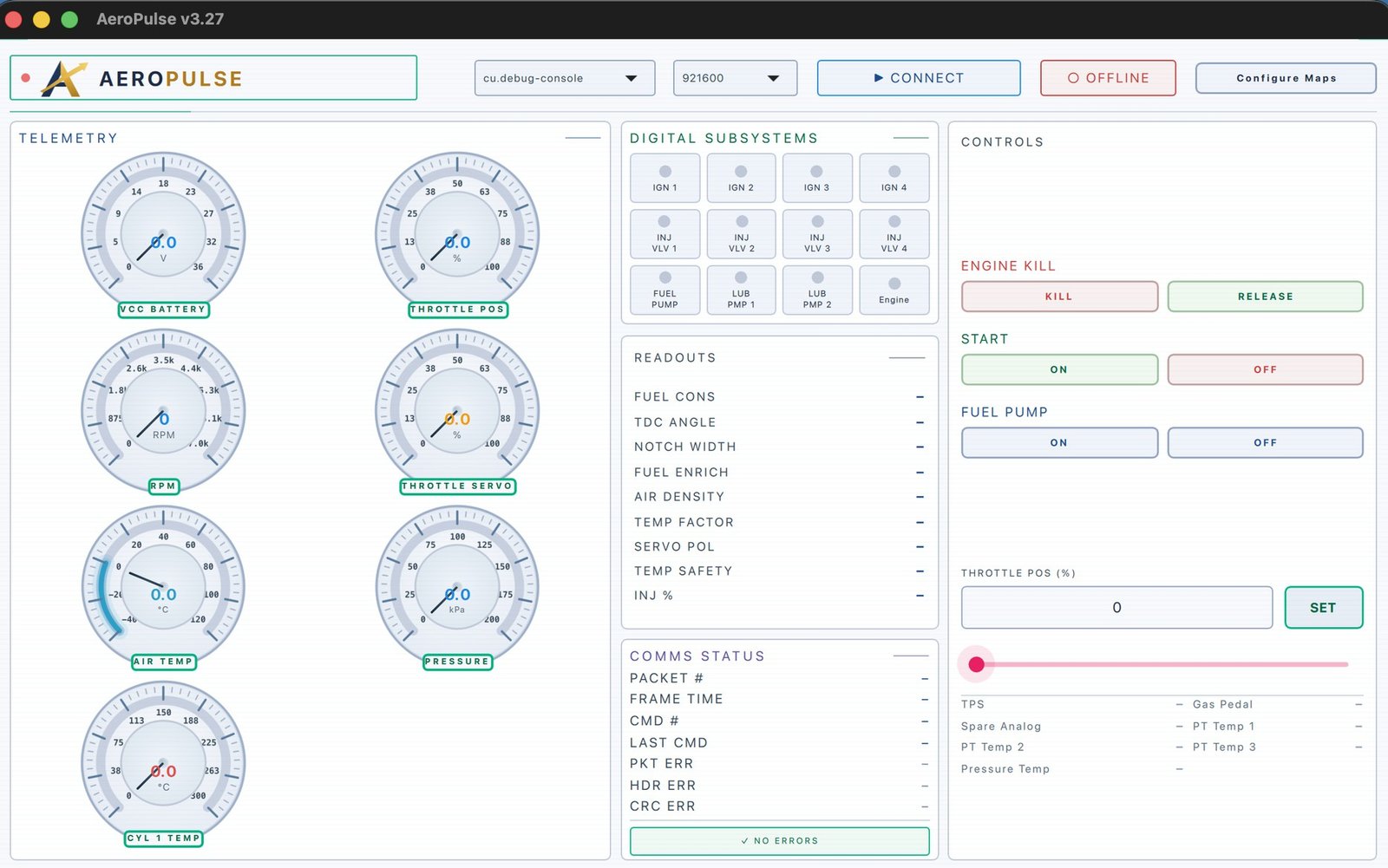
The tuning and telemetry console for the ECU. Engineers watch the engine live, adjust fuel and ignition behaviour while it runs, and capture every frame to disk for post-flight analysis. Built for the test cell first, so the data survives the conditions the aircraft does.
Technical specifications, performance data, and integration documentation are shared with qualified partners under non-disclosure agreement.
Request a technical briefingMost unmanned systems are assembled from parts that were never designed for each other, and the integration tax is paid in weight, reliability, and a supply chain nobody controls.
AeroNext develops each layer in-house so they can be optimised against one another — and so the aircraft is never hostage to a single external supplier.
Three domains, developed as one architecture rather than as separate products bolted together.
Engine control units, electrical generation, and power management unified in a single architecture — with the calibration software engineers need to extract performance from a specific airframe and mission profile.
Embedded avionics built around the propulsion core, modular airframes that accept mission payloads without redesign, and an update pipeline that improves fielded aircraft over the air.
Adaptive navigation, intelligent mission planning, predictive maintenance from operational data, and multi-agent coordination for aircraft that operate collaboratively at scale.
Airframe, propulsion, ECU, embedded electronics, and software developed in-house — performance optimised across layers, with no dependence on an external supplier for the critical path.
Engine control, electrical generation, and power management unified in one architecture. Less weight, less wiring complexity, fewer things to fail.
Capability lives in software, so the platform improves without new hardware. Adaptive navigation, intelligent mission planning, and learning from operational data.
One platform reconfigured for logistics, inspection, surveillance, or agriculture without redesigning the aircraft around each payload.
New algorithms, security patches, and performance improvements deployed to fielded systems — extending service life and holding a technical lead.
Developed in the Kingdom, contributing to sovereign capability in advanced aerospace and reducing reliance on imported unmanned systems.
Modularity is the point. The same propulsion and control core serves missions with very different payloads and endurance profiles.
Payload delivery across distances and terrain where ground transport is slow or unavailable.
Pipelines, power infrastructure, and remote assets surveyed on schedule rather than on failure.
Persistent wide-area observation with endurance that short-range electric platforms cannot reach.
Precision survey and treatment across large holdings, informed by repeat-pass data.
Coordinated multi-aircraft operations for large-scale movement of goods.
Sovereign unmanned capability developed and supported inside the Kingdom.
AeroNext Technologies is incorporated in Saudi Arabia to localise high-value aerospace manufacturing — developing the engines, control electronics, and autonomy software domestically, and building toward export-oriented unmanned systems.
Our work is aligned with Vision 2030 objectives in advanced aerospace technologies, unmanned systems, intelligent propulsion, and embedded avionics.
We work with operators, integrators, and investors building unmanned capability in the region. Tell us about the mission, and we'll tell you how our systems fit it — with full technical detail under NDA.